Section III · Fusion Energy
Magnetic Confinement Fusion: ITER, SPARC and the Stellarator Alternative
The largest scientific instrument under construction is compared with a compact high-field competitor and with a geometry that dispenses with plasma current altogether.
Scope and methodology
This section compares five magnetic confinement devices: ITER, SPARC, JET, JT-60SA and Wendelstein 7-X. Comparison is made on major radius, toroidal field, magnet technology, achieved or targeted fusion gain, operating status and published schedule. Cost figures are given where an organisation has published them. Sources are peer-reviewed design papers, laboratory announcements and the ITER Organization's published baseline.
Physics basis
The deuterium–tritium reaction releases 17.6 MeV per event, four fifths carried by a neutron and one fifth by an alpha particle that heats the plasma. Lawson showed in 1957 that a self-sustaining reaction requires the product of density, temperature and energy confinement time to exceed a threshold;1 for D–T that triple product is approximately 3 × 10²¹ keV s m-3 at temperatures of 10 to 20 keV. Performance is reported as the scientific gain Q, the ratio of fusion power to external heating power injected into the plasma. Q makes no allowance for the electricity consumed by magnets, heating systems and plant, so engineering gain is substantially lower. A 2022 review by Wurzel and Hsu tabulates every published triple product and places the best tokamak results within a factor of a few of ignition.2
ITER
ITER, under assembly at Cadarache in southern France by a partnership of 35 nations, is a tokamak of 6.2 m major radius and 840 m3 plasma volume with a toroidal field of 5.3 T generated by niobium-tin and niobium-titanium superconducting coils cooled to 4 K. Its objective is 500 MW of fusion power from 50 MW of heating, Q ≥ 10, sustained for 400 seconds, together with a demonstration of tritium breeding modules.3 The 2024 baseline replaced the previous first-plasma date of 2025 with a start of research operation in 2034, full magnetic energy in 2036 and deuterium–tritium operation in 2039, following the discovery of dimensional defects in vacuum vessel sectors and corrosion in thermal shield pipework.4 The organisation's own construction cost estimate exceeds EUR 20 billion; independent estimates that include member-state in-kind contributions at market value are several times higher.
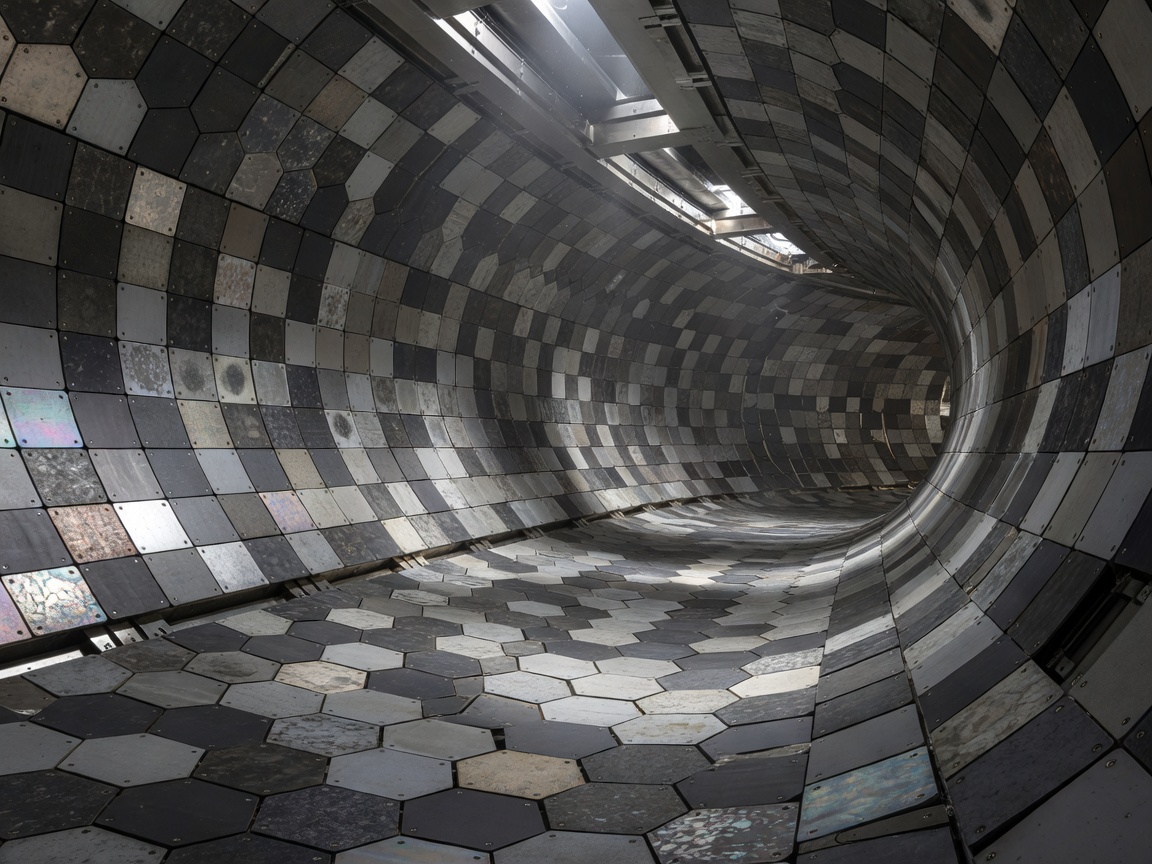
SPARC and high-temperature superconductors
Fusion power density in a tokamak scales approximately with the fourth power of magnetic field, so doubling the field permits a device of roughly one sixteenth the volume for the same output. Commonwealth Fusion Systems, spun out of the MIT Plasma Science and Fusion Center, is exploiting this scaling in SPARC, a tokamak of 1.85 m major radius and 12.2 T on-axis field using rare-earth barium copper oxide (REBCO) high-temperature superconducting tape. Published design papers predict Q greater than 2 with a plausible range up to 11.5 The enabling technology was demonstrated in September 2021 when a full-scale toroidal field model coil reached 20 T.6 SPARC is under construction at Devens, Massachusetts, with first plasma targeted for 2026 to 2027; the company's follow-on ARC plant, announced for Chesterfield County, Virginia, is planned at 400 MW electrical output in the early 2030s. These dates are recorded as stated by the company.
JET and JT-60SA
The Joint European Torus at Culham, a copper-magnet tokamak of 2.96 m major radius, held the fusion energy record for three decades. Its final deuterium–tritium campaign in February 2024 produced 69 megajoules over five seconds from 0.2 mg of fuel, exceeding its own 2021 record of 59 MJ, before the machine was shut down in December 2023 for decommissioning studies.7 JET's peak scientific gain was approximately 0.67 in 1997. JT-60SA at Naka, Japan, a superconducting tokamak of comparable size built jointly by Japan and Europe, achieved first plasma in October 2023 and is the largest superconducting tokamak in operation. It uses deuterium only and serves as an ITER satellite for scenario development.
The stellarator alternative
A stellarator generates the twisted magnetic field entirely with external coils rather than with plasma current, eliminating the disruptions and current-drive requirements that complicate tokamak operation and permitting steady-state running. Wendelstein 7-X at Greifswald, Germany, uses 50 non-planar and 20 planar superconducting coils to produce a 3 T optimised field in a plasma of 5.5 m major radius.8 Since the installation of water-cooled divertors it has sustained discharges of eight minutes with 1.3 GJ of injected energy and, in 2025, recorded the highest triple product for any stellarator over a 43-second pulse.9 The historical objection to stellarators, poor neoclassical confinement, has been addressed by computational optimisation of coil shape; the remaining objection is the cost and tolerance of manufacturing the coils. Proxima Fusion in Munich and Type One Energy in the United States are designing power-plant stellarators around HTS magnets.
Comparative register
| Device | Type and magnets | Major radius | Toroidal field | Gain | Status |
|---|---|---|---|---|---|
| ITER | Tokamak, Nb3Sn / NbTi | 6.2 m | 5.3 T | Q ≥ 10 (target) | Assembly; research operation 2034 |
| SPARC | Tokamak, REBCO HTS | 1.85 m | 12.2 T | Q > 2 (target) | Construction; first plasma 2026–27 |
| JET | Tokamak, copper | 2.96 m | 3.45 T | Q ≈ 0.67 (1997); 69 MJ (2024) | Ceased operation December 2023 |
| JT-60SA | Tokamak, NbTi | 2.96 m | 2.25 T | Not applicable (deuterium only) | Operating since 2023 |
| Wendelstein 7-X | Stellarator, NbTi | 5.5 m | 3 T | Not applicable (no tritium) | Operating; long-pulse campaigns |
Assessment
- ITER remains the only device designed to demonstrate burning-plasma physics at Q ≥ 10; its schedule has slipped by roughly a decade and its cost is the highest of any fusion project.
- SPARC offers a faster and cheaper route to Q > 1 if REBCO magnets perform under neutron irradiation and the compact geometry manages divertor heat loads; neither has been tested at scale.
- Stellarators offer steady-state operation without disruptions at the price of coil complexity; Wendelstein 7-X has retired the confinement objection but not yet the manufacturing objection.
Common to all magnetic approaches are the unsolved problems of a first-wall material that survives 14 MeV neutron fluence for years, a tritium breeding ratio above unity, and a supply of lithium-6 sufficient for a fleet of plants. The register records no magnetic device that has produced net electrical energy, and none that is scheduled to do so before the 2030s.
References
- Lawson, J. D. "Some Criteria for a Power Producing Thermonuclear Reactor." Proceedings of the Physical Society, Section B 70, 6–10 (1957). doi:10.1088/0370-1301/70/1/303 ↩
- Wurzel, S. E. and Hsu, S. C. "Progress toward fusion energy breakeven and gain as measured against the Lawson criterion." Physics of Plasmas 29, 062103 (2022). doi:10.1063/5.0083990 ↩
- ITER Organization. "The ITER Tokamak: machine parameters and goals." iter.org/machine (accessed January 2026). ↩
- ITER Organization. "ITER Baseline 2024." iter.org, project news, July 2024 (accessed January 2026). ↩
- Creely, A. J. et al. "Overview of the SPARC tokamak." Journal of Plasma Physics 86, 865860502 (2020). doi:10.1017/S0022377820001257 ↩
- Hartwig, Z. S. et al. "The SPARC Toroidal Field Model Coil Program." IEEE Transactions on Applied Superconductivity 34, 0600316 (2024). doi:10.1109/TASC.2023.3332613 ↩
- EUROfusion. "European researchers achieve fusion energy record." Press release, 8 February 2024. euro-fusion.org/eurofusion-news/dte3record ↩
- Wolf, R. C. et al. "Major results from the first plasma campaign of the Wendelstein 7-X stellarator." Nuclear Fusion 57, 102020 (2017). doi:10.1088/1741-4326/aa770d ↩
- Max Planck Institute for Plasma Physics. "Wendelstein 7-X: results and operation." ipp.mpg.de/w7x (accessed January 2026). ↩